
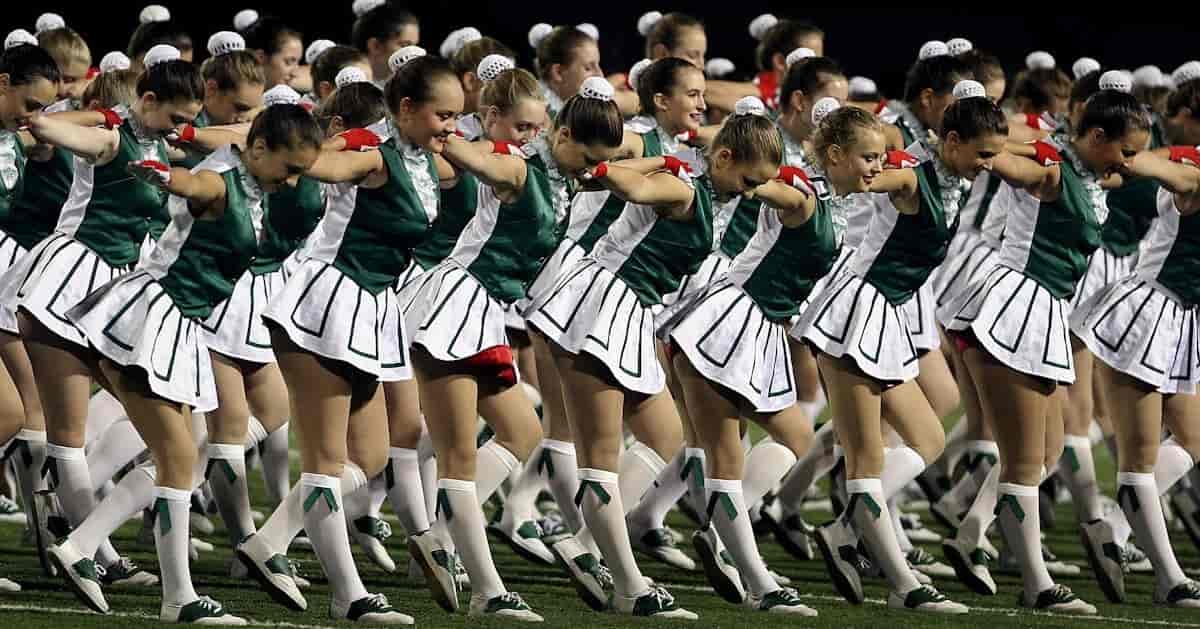
Conditioning is what turns good cheerleaders into great ones. Strong muscles help lifts and stunts. Better balance keeps flyers safe. Faster feet make routines sharp.
This article gives 10 easy-to-follow conditioning drills you can use at practice or at home. Each drill has why it helps, how to do it, sets and reps, and coaching tips so teams and coaches get real results.
These drills work for sideline squads, all-star teams, and school programs. If you want to brush up other skills while you train, check useful pages like our guide to basic cheerleading jumps, what is tumbling in cheerleading, and foods cheerleaders should eat every day.
Jump to
How to perform it
Pick 3 to 5 drills to add to each practice. Rotate them through the week. Warm up before every session. Keep form tight. If someone is hurt or new to strength work, lower the reps and focus on technique.
1. Single-Leg Deadlift (Balance + Posterior Chain)
Why it helps: Cheerleaders need strong hamstrings, glutes, and balance. Single-leg deadlifts build the back of the body and train one-leg stability for flyers and jump landings.
How to do it:
Stand tall on one foot. Slight bend in the knee. Hinge at the hip and reach toward the floor with both hands while the back leg lifts behind you. Keep your back flat. Return to standing.
Sets and reps: 3 sets of 8–10 reps per leg.
Coaching tips: Use a light dumbbell or a medicine ball if needed. Keep your hips square. Watch for rounded backs. Slow and controlled beats fast and sloppy.
Progression: Add weight or close your eyes for a balance challenge.
2. Bulgarian Split Squat (Single-Leg Strength)
Why it helps: Bases need single-leg power and stability. This drill builds leg strength without heavy back loads.
How to do it:
Place one foot behind you on a bench. Keep the front foot planted. Lower into a lunge until the front thigh is nearly parallel to the floor. Push up through the front heel.
Sets and reps: 3 sets of 8–12 reps per leg.
Coaching tips: Keep the torso upright. Make sure the front knee tracks over the toes. Use body weight first, then add dumbbells.
Progression: Add a pause at the bottom for extra control.
3. Box Jumps (Explosive Power)
Why it helps: Jump height and quick takeoffs matter for toe touches, tucks, and cleand pop into stunts. Box jumps teach power and safe landings.
How to do it:
Stand in front of a sturdy box or platform. Swing your arms and jump onto the box with both feet. Land softly on the balls of your feet. Step down safely.
Sets and reps: 4 sets of 5 reps.
Coaching tips: Start with a low box. Focus on a soft landing and quick step down. Do not let athletes stall in the air; teach a strong arm swing to help.
Progression: Increase box height slowly. Add lateral box jumps for side-to-side power.
4. Plank Variations (Core Stability)
Why it helps: A tight core helps hold body shapes in stunts, supports tumbling, and stabilizes landings.
How to do it:
Start with a standard forearm plank. Keep a straight line from head to heels. Try side planks, plank shoulder taps, and plank reaches for variety.
Sets and reps: 3 rounds: 45–60 seconds each plank variation.
Coaching tips: Watch for sagging hips and neck strain. Encourage steady breathing. Quality beats length — better to hold a clean 30 seconds than a sloppy minute.
Progression: Add leg lifts or weighted plates on the back for advanced athletes.
5. Partner Resisted Band Runs (Speed + Drive)
Why it helps: Sprint mechanics and leg drive matter for quick entrances and fast transitions. Resistance bands build power in the drive phase of a sprint.
How to do it:
One athlete wears a hip belt with a short resistance band. The partner holds the band and provides light resistance while the runner sprints 10–15 yards. Switch roles.
Sets and reps: 6–8 sprints of 10–15 yards, full rest between reps.
Coaching tips: Keep resistance light so the runner maintains good form. Focus on knee drive and arm swing. This trains sprint posture and power without heavy weights.
Progression: Shorten the band for more resistance or increase sprint distance.
6. Hollow Body Holds and Rocks (Tumbling Strength)
Why it helps: Hollow body position is the base for clean tucks, layouts, and controlled flips. Strong hollow shapes make tumbling tighter and safer.
How to do it:
Lie on your back. Press your lower back to the floor. Lift your shoulders and legs slightly off the ground. Hold. For rocks, keep the shape and rock forward and back.
Sets and reps: 3 sets of 30–45 second holds or 20 rocks.
Coaching tips: Emphasize a flat lower back. Keep the chin slightly tucked. This is a low-impact but high-value drill for flyers and tumblers.
Progression: Add ankle weights or longer holds for advanced athletes.
7. Lateral Bound to Stick (Lateral Power + Landing)
Why it helps: Many stunts and formations require side-to-side power and clean landings. Lateral bounds train single-leg control and absorption.
How to do it:
Jump sideways from one foot to the other, aiming to stick the landing with soft knees. Pause for a beat and keep balance.
Sets and reps: 3 sets of 10 bounds per side.
Coaching tips: Encourage quiet landings. Use cones to mark distances and increase range as control improves.
Progression: Add a quick hop after the landing to train rebound and readiness.
8. Push-Up Progressions (Upper Body Strength)
Why it helps: Bases need strong shoulders, chest, and triceps for lifts and holds. Push-ups build upper-body strength with low risk.
How to do it:
Start with knee push-ups or incline push-ups for beginners. Progress to full push-ups, then to plyometric push-ups for power.
Sets and reps: 4 sets of 8–15 reps depending on skill level.
Coaching tips: Keep the body in a straight line. Avoid letting hips sag. If form drops, reduce reps or switch to a modified version.
Progression: Add weighted vests or do single-arm holds for advanced athletes.
9. Russian Twists (Rotational Core Strength)
Why it helps: Twisting strength improves toss control, tumbling rotations, and body control during twists.
How to do it:
Sit on the floor with knees bent. Lean back slightly. Hold a light medicine ball or weight and rotate the torso from side to side. Keep feet off the floor if you can.
Sets and reps: 3 sets of 20 reps (10 per side).
Coaching tips: Move with control. Don’t rush the twist — quality rotation is what builds usable strength. Keep movements tight and small rather than wild.
Progression: Increase weight slowly or extend legs for more difficulty.
10. Tempo Jump Series (Jump Endurance + Form)
Why it helps: A routine needs consistent jumps across the whole performance. Tempo series train repeatable jump height and clean form under fatigue.
How to do it:
Pick a basic jump (toe touch or pike). Do a set of 8 jumps on a 5-second tempo (jump, land, jump…). Rest 60–90 seconds. Repeat for 3 rounds.
Sets and reps: 3 rounds of 8–12 jumps.
Coaching tips: Focus on full extension and toe pointed. Keep arms strong and land quietly. This trains muscle memory for consistent jumps during tired moments in a routine.
Progression: Reduce rest time or increase reps as fitness improves.
Putting It Together: A Weekly Plan
Here’s an easy plan to help teams use these drills without overloading athletes:
Monday: Strength focused
- Bulgarian split squat (3×8 each)
- Push-up progressions (4×10)
- Plank variations (3x45s)
Wednesday: Power and jumps
- Box jumps (4×5)
- Tempo jump series (3×8)
- Lateral bounds (3×10 each)
Friday: Balance and core
- Single-leg deadlifts (3×8 each)
- Hollow body holds (3×30–45s)
- Russian twists (3×20)
Add short sprint work (band runs) or tumbling prep as a finisher on any day. Always finish with a cool down and light stretching.
Safety Tips and Common Mistakes
- Warm up well. Always raise heart rate and move joints before heavy drills.
- Prioritize form. Better form reduces injury risk and trains the right muscles.
- Scale for skill. Not every athlete needs plyo box jumps at first. Start lower and progress.
- Rest is training. Muscles grow during rest. Avoid daily max-effort sessions.
- Watch landing mechanics. Soft knees, weight on the balls of the feet, and a stable core reduce knee and ankle strain.
Nutrition and Recovery
Strength and conditioning work only if athletes fuel and recover. Encourage whole foods, lean protein, fruits, and carbs enough for training. For quick reads on diet and snacks, see our guide on foods cheerleaders should eat every day and healthy snacks for cheerleaders. Hydration matters—drink water before, during, and after practice.
How Coaches Can Track Progress
- Use simple tests. Record box jump height, plank hold time, or single-leg deadlift reps every 4–6 weeks.
- Keep short logs. A practice note with weights, reps, and how athletes felt helps spot fatigue or improvement.
- Measure form, not just numbers. Film athletes occasionally for form checks on jumps and landings.
Next Steps
Conditioning is not flashy, but it is the backbone of strong stunts, high jumps, and safe tumbling. Add these drills in a steady, planned way. Start light, value quality, and progress gradually. Over weeks and months you will see stronger bases, steadier flyers, and cleaner routines.
If you want a printable practice plan or a ready-made warm-up to pair with these drills, I can create one for your team. For more skill-specific training, try pages on basic cheerleading jumps, what is tumbling in cheerleading, and how to make the cheer team to help with tryout prep and routine work.